





Why Your Search Strategy Needs Both SEO and GEO


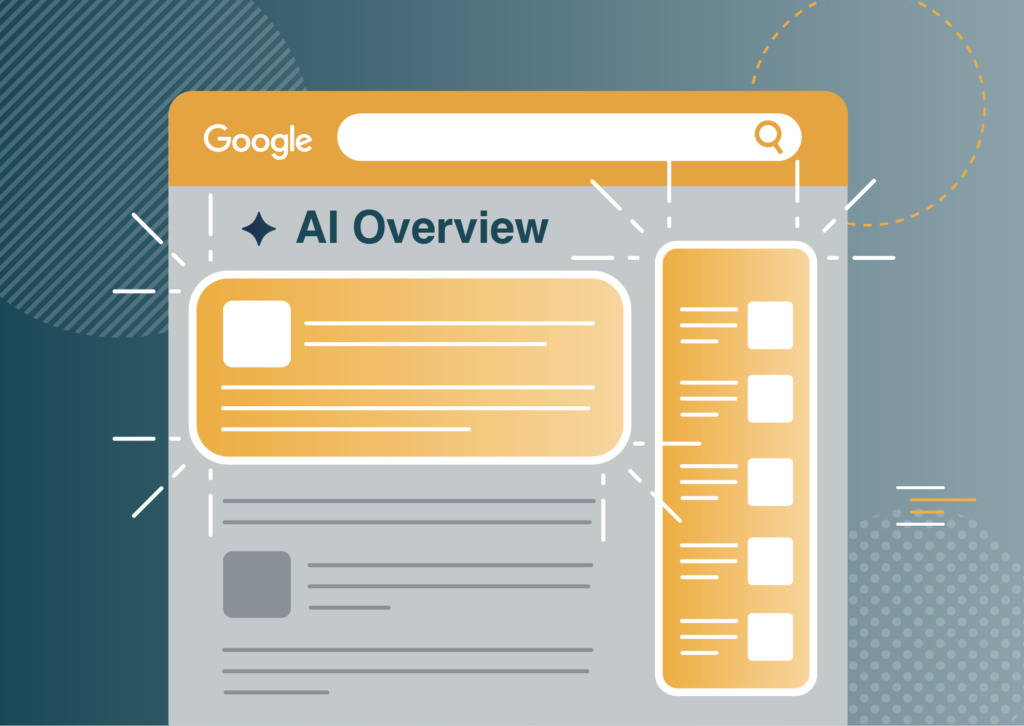
If you have noticed a shift in your organic website traffic recently, you are certainly not alone.
Many business owners and marketing leaders are looking at their analytics dashboards with a sense of unease. However, this isn’t the result of a typical search engine algorithm update. Instead, we are seeing a fundamental shift in how people find information, products, and services online.
For years, the path to purchase began with a search query, followed by a scroll through a list of ten blue links (and some ads), and ended with a click-through to a website. Or, if you’re anything like me, it involved opening several competing websites in different tabs to compare them manually.
Today, prospective customers are increasingly moving past the traditional browse-and-click routine. They are asking AI engines to do the work for them.
“AI engines don’t generate knowledge out of thin air. To provide answers, large language models (LLMs) rely on the very index that traditional SEO has spent decades building.”
While many commentators have declared this the death of search engine optimisation (SEO) – as is the case on a weekly basis, almost like clockwork, in some corners of the internet – the reality is far more nuanced. We are not seeing the end of SEO, but rather its evolution.
To maintain and grow your market share, your digital strategy has to bridge the gap between traditional SEO and Generative Engine Optimisation (GEO).
From Deficit to Driver: Shifting the Perspective on “Zero-Click” Search
The rise of generative AI has accelerated a trend that was already quietly growing: the “zero-click” search. Industry data shows that a vast majority of web searches now end without the user clicking on a single external website link. Between Google’s instant answers and AI-generated overviews, users are getting what they need right on the search results page.
At first glance, this looks like a massive deficit – especially if you’ve spent the last few years tirelessly building your organic visibility. It is easy to assume that if people aren’t clicking through to your site, you can’t expect to convert them.
When we discuss this with business owners and marketing teams, and we get under the top few layers of data, we often see a very different reality. We work to adjust their mindsets around this new landscape, encouraging them to see this shift not as a loss of traffic, but as a powerful driver of higher-quality engagement.
Our own data, alongside the trends we are tracking across our clients’ campaigns, reveals a fascinating reality: the traffic that does reach your site from AI search interfaces is far more intent-driven than traditional search visits.
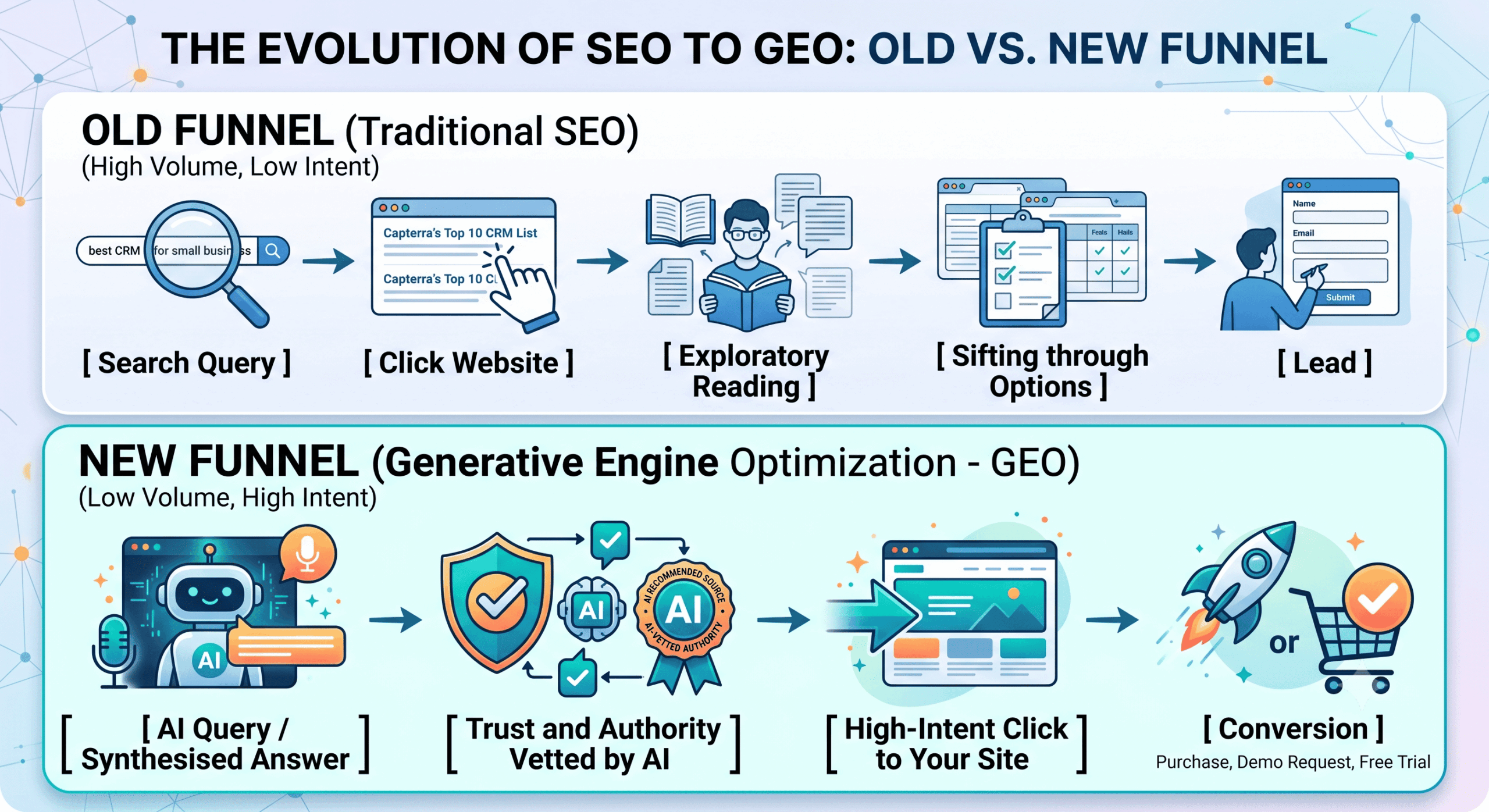
When someone clicks a citation link inside an AI response, they usually aren’t at the start of their journey, like they might be with traditional search. They have already used the AI to educate themselves, compare options, and filter out irrelevant answers. They aren’t looking for generic terms like “builder in Birmingham” or “builders near me.” Instead, they are typing in highly specific, multi-layered prompts:
“What is the most reliable construction firm in the West Midlands specialising in oak-framed orangeries, with experience in green belt planning restrictions?”
They have essentially fast-tracked themselves through the exploratory phases of the sales funnel and are now into the nitty-gritty of choosing who to work with.
By the time they land on your website, they aren’t looking for basic introductory information. They are arriving with deep buying intent, looking for the final pieces of the puzzle to confirm their decision.
What Buyers Are Looking for When They Arrive
Because generative search does the heavy lifting of answering basic questions, your website’s role has fundamentally changed. Your content no longer needs to focus on general educational guides designed to capture broad, low-intent search terms.
Instead, when an AI-vetted prospect lands on your site, they are looking to validate specific criteria:
Undeniable trust and authority. They want to see that your business is recognised as an industry leader. This means your case studies, certifications, and industry accolades must be front and centre, serving as immediate social proof that backs up the AI’s recommendation.
Deep experience and real-world results. They need to see exactly how you have solved their specific problem for others in their sector. Detailed, results-oriented project portfolios show them your practical capability in action.
Cultural fit and approachability. Because the transactional details have largely been vetted, prospects want to understand your specific approach to client relationships. They are looking to see if your team’s culture and communication style align with their own.
Logistics and immediate feasibility. Finally, they are checking the administrative boxes. They want clear indicators of your pricing models, timeliness of delivery, and service availability to ensure you can actually meet their timeline.
Your website is no longer just an information portal or brochure website; it is a validation mechanism.
If your online presence is optimised to showcase these high-trust elements, those high-intent visitors will convert at a significantly higher rate than the casual browsers of the past.
The Coexistence of Search and Synthesis
It is easy to look at platforms like ChatGPT, Google Gemini, and Perplexity and assume traditional search is obsolete. But here is the critical piece of the puzzle that many miss: AI engines don’t generate knowledge out of thin air.
To provide answers, large language models (LLMs) rely on the very index that traditional SEO has spent decades building. They need structured, high-quality, authoritative web content to digest, synthesise, and cite.
Without a robust SEO foundation, AI crawlers cannot find or trust your website. Without GEO, those same engines may crawl your site but not recognise your business as the definitive answer to a user’s prompt.
The two strategies do not compete against each other; they complement one another as part of a broader, cohesive digital strategy.
The Science of LLM Visibility
So, how do you actually optimise for an AI engine?
Unlike traditional SEO, which often focuses on keyword density and backlink volume, GEO requires a deeper understanding of how language models process information. AI models prioritise content based on specific credibility signals. They look for consensus across multiple independent sources to verify that a business is reliable. They analyse semantic structures to ensure an answer directly addresses the intent of a prompt, and they favour high information density, which means providing clear, concise, and fluff-free value.
Achieving this requires a sophisticated approach to content structure, digital PR, and technical data markup. It is about positioning your brand so clearly across the web that when an AI system synthesises an answer, your business is the logical, undisputed choice to highlight.
Is Your Business Ready for the Transition?
The digital landscape is moving fast, but these changes represent a massive opportunity for businesses that choose to adapt early. Balancing traditional search visibility with a forward-thinking GEO strategy is the most effective way to ensure your sales team continues to receive qualified, high-intent leads.
Understanding the theory is a great start, but evaluating how your brand currently registers across various AI models requires specialised tools and strategic analysis.
Let’s look at how your business is positioned in this new era of search.
Book a 15-minute introductory chat with the team at Unity, and we can help you map out a balanced, future-proof strategy for the road ahead.
Talk to Our Marketing Team Today

More about Our Insights…

The CRO Relaunch: How We Transformed Unity’s Own Digital Presence

Nurturing the Talent of the Next Generation: Becoming a Teacher at Loughborough University

The Benefits Of Growing Your Organic Traffic
Grow your business with a smart, sustainable SEO strategy.

On-Page SEO
Optimising your website content for higher search rankings.
Off-Page SEO
Building credibility and authority with links and brand mentions.
Human Centric SEO
Creating content for people and search engines.

Technical SEO
The core mechanics of search engines to boost your rankings.
3 ways to incorporate personalisation to up your marketing game

6 Key Performance Indicators to help boost your marketing
How to successfully create an influencer marketing strategy
We're a team you'll love working with. Let's talk.
Enquire about our services
1 of 5
Start by letting us know your name?
Enquire about our services
2 of 5
, what
challenge can we help
you with?
Enquire about our services
3 of 5
, what services
are you
interested in?
Enquire about our services
4 of 5
Do you have any additional questions?
Enquire about our services
5 of 5
Confirm your details




-

-

-

-
 info@weareunity.co.uk